Key points
- Acute bacterial prostatitis is a real and potentially serious infection; chronic pelvic pain syndrome is different.
- Negative cultures and failed antibiotics are diagnostic information that should change the next step.
- Repeated antibiotics without bacterial evidence expose you to harm while reinforcing the wrong explanation.
- Explaining how the nervous system amplifies pain is not saying the pain is psychological.
- A good plan sets a target and a trial period for each treatment, and stops what does not help.
- Success can be sitting longer, sleeping better or resuming intimacy, even if some sensation remains.
When one word hides several systems
Some men are treated for prostatitis for years. Antibiotics help once, then stop helping. Cultures are negative. Sitting worsens the pain, ejaculation hurts, the stream becomes hesitant when pain flares, and the pelvic-floor muscles are markedly tender. What such a patient needs is not a stronger antibiotic. It is a different diagnosis.
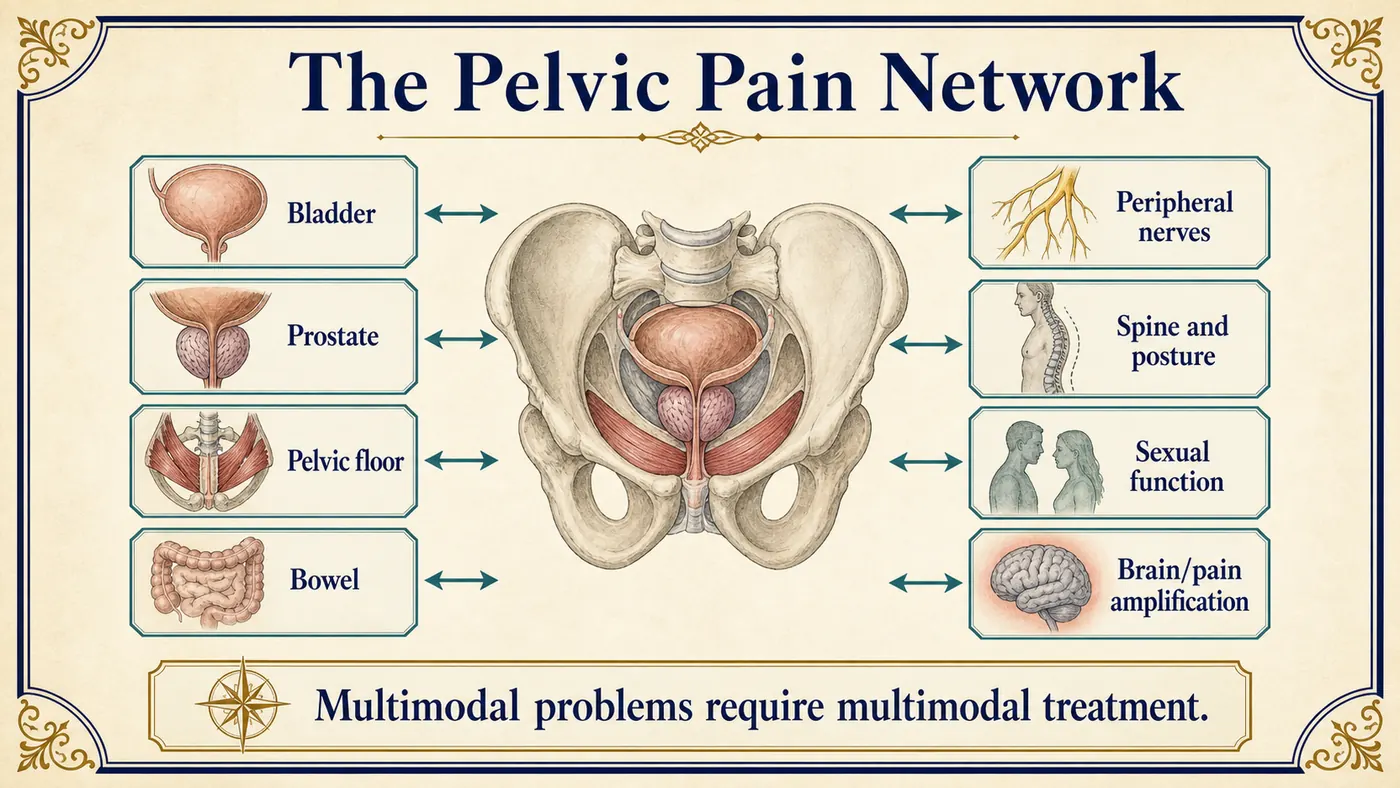
Pelvic pain may involve infection, bladder sensation, pelvic-floor muscle, the bowel, nerves, sexual function or the way the nervous system processes pain. Calling all of it prostatitis delays the correct treatment.
Different conditions behind similar pain
Acute bacterial prostatitis is a real and potentially serious infection. Fever, chills, pelvic or perineal pain, urinary symptoms and general illness can occur, and urinary retention can complicate it. It needs prompt care.
Chronic bacterial prostatitis is different. It requires evidence that bacteria are persisting in the prostate pathway.
Chronic prostatitis/chronic pelvic pain syndrome describes ongoing pelvic pain with urinary, sexual or emotional effects when bacterial infection does not explain the pattern. Despite the name, the mechanism may involve pelvic-floor muscle, nerve sensitivity, bladder symptoms, bowel dysfunction, prior inflammation, stress amplification and changes in pain processing.
Bladder pain syndrome often brings pain, pressure or discomfort as the bladder fills, with frequency and urgency, after infection and other causes have been considered. Some people feel better after voiding; others have overlapping urethral, vaginal, pelvic-floor or more widespread pain.
How pain becomes self-sustaining
When tissue hurts, the body protects it. Pelvic muscles tighten, movement changes, urination becomes guarded, sex is avoided and attention locks onto the painful area. That makes sense after an acute injury. When it continues for months, the protection itself can become part of the problem. A tight pelvic floor can cause burning, hesitancy, rectal pressure, pain after ejaculation and a feeling that urine remains. Poor sleep lowers pain tolerance, constipation adds pelvic load, and fear of pain changes breathing and abdominal pressure. The nervous system can keep amplifying signals after the original trigger has resolved.
This is not saying the pain is psychological. All pain is processed in the nervous system, just as vision happens in the brain. Anxiety, depression, trauma and stress can intensify the loop, but they are not required for genuine pelvic pain. Screening for them widens treatment; it does not invalidate the symptom. Equally, being told to “just relax” is dismissive.
Mapping the problem before prescribing
The evaluation starts with the timeline, where the pain is, how it relates to the bladder, past cultures, sexual and bowel symptoms, prior surgery, trauma, nerve symptoms and medications. The examination may reveal a hernia, prostate tenderness in the right context, excess pelvic-floor tension, tissue change or another source. Urinalysis and culture help exclude infection. Imaging, cystoscopy or urodynamics are used selectively when blood, obstruction, stones, prior surgery, treatment failure or uncertainty give a reason.
The goal is a working map of the dominant contributors. Is there evidence of infection? Does pain rise as the bladder fills? Are the pelvic-floor muscles tender or unable to relax? Are bowel problems, hip or spine disease, nerve symptoms or sexual pain present? Is there real obstruction, or does the stream worsen because pain causes guarding? Which feature is most disabling today? Pain centered on the bladder with frequency calls for a different starting plan than pain triggered by sitting and reproduced by pressing on the pelvic floor.
A coordinated treatment plan
- Pelvic-floor physical therapy for tenderness, coordination, breathing and movement.
- Medications chosen by pattern and health history: alpha-blockers or bladder-directed drugs for selected urinary features, anti-inflammatory drugs, or medicines for nerve-related pain.
- Bowel management, sleep and movement to reduce pelvic load and pain sensitivity.
- Pain-psychology and cognitive-behavioral tools to reduce fear, avoidance and amplification while physical treatment continues.
- Sexual counseling to help couples rebuild intimacy without repeatedly provoking a flare.
Change the plan when it is not working
Chronic pain care tends to pile up treatments that never helped. A better plan defines the target and the trial for each one: which symptom should improve, over what period, and which side effects would end the attempt. Ineffective treatments should be stopped, and the diagnosis reconsidered when several reasonable approaches fail. New blood, fever, weight loss, a mass, progressive neurologic change, significant retention or a sharply different pain pattern should never be absorbed into the old chronic-pain label.
Progress may be uneven. A flare does not always mean failure, and being completely pain-free is not the only success. Sitting longer, sleeping better, urinating without guarding, resuming intimacy and returning to exercise all show recovery.
Questions to ask your urologist
- Is there real evidence of bacterial infection in my case?
- Which contributors seem to be sustaining my pain: bladder, muscle, nerve, bowel or something else?
- Should pelvic-floor physical therapy or another specialist be involved?
- What change in function would show that the plan is helping, and over what time frame?
- Which current treatments should I stop if they have not helped?